
La Palma is the greenest and most varied of the Canary Islands, a paradise for anyone who loves being outdoors. Here are my highlights from many trips: beaches, the Tajogaite volcano, hikes, diving and biking. And yes, the island is fully open again after the volcano, though some places on the west coast have changed.
Beaches on La Palma
La Palma has a small but fine selection of beaches, mainly on the west and east coasts. They all have black sand that gets seriously hot in summer. Watch the flags, if it is red it is better to stay out of the water.
- Playa del Charco Verde (west): my favourite beach in a small bay, great for snorkelling, with loungers and a nice kiosk.
- Playa de Puerto Naos (west): the largest, finest and best-known beach with good facilities.
- Playa de Tazacorte (west): a long, fine beach with the harbour wall as a breakwater.
- Charco Azul and La Fajana (north-east): natural seawater pools, ideal for children too.
- Playa de los Cancajos (east): well protected, family-friendly, plenty of facilities.
The Tajogaite volcano
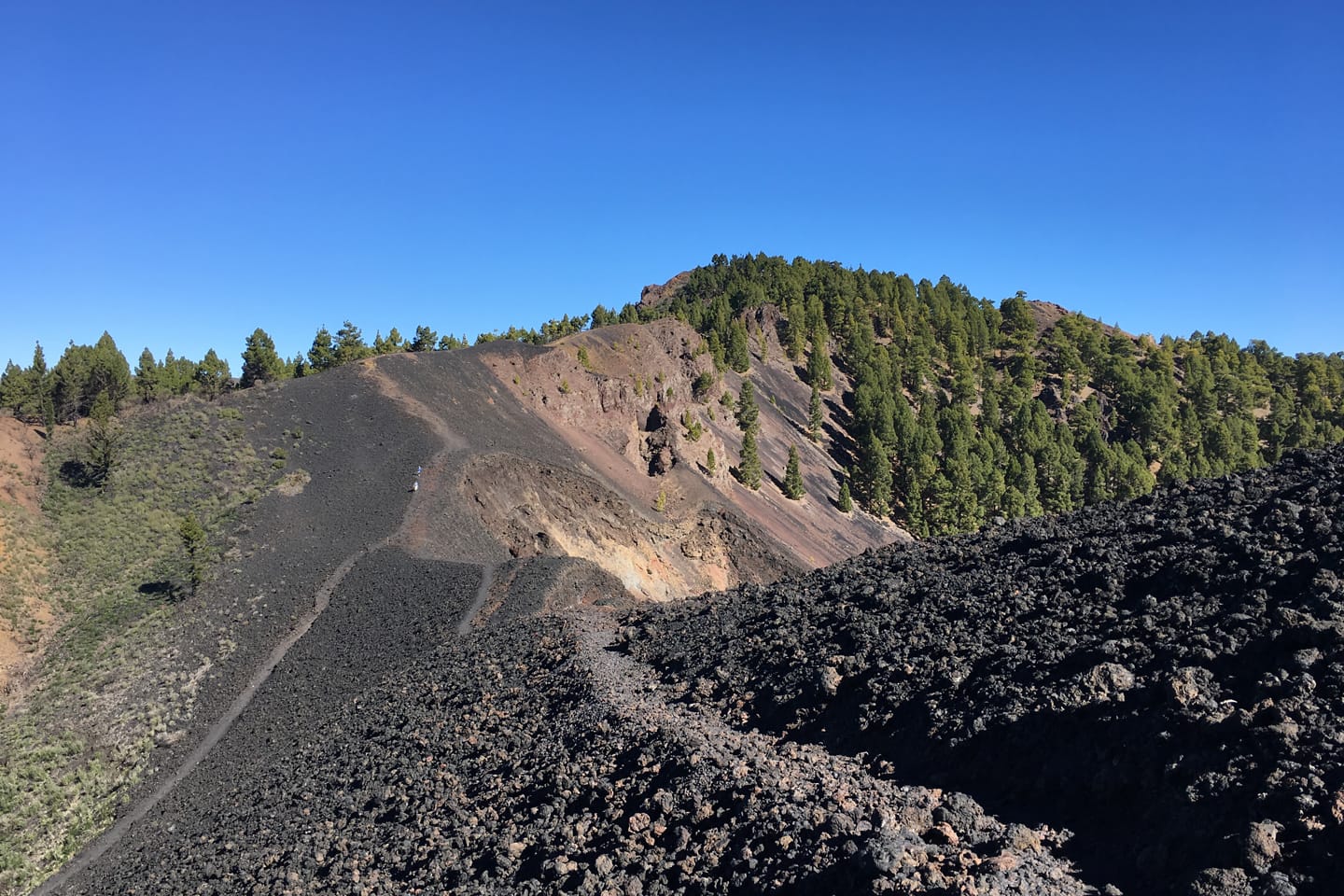
The Tajogaite volcano in the Cumbre Vieja erupted from 19 September to 13 December 2021 and has been a popular destination for guided tours since autumn 2024. From several viewpoints you overlook the new volcanic cone and the hardened lava fields, for example from the Mirador del Time, the area around Tajuya or the Llano del Jable. Guided volcano hikes explain what happened in 2021. An impressive contrast to the green northern half, and one of the reasons La Palma is worth it even after the eruption. As far as I know, tours on your own are not permitted, so you go with a licensed guide.
Hiking on La Palma
La Palma is a hiking paradise with routes for every level. Before bigger tours it is worth checking the tourist office or a knowledgeable local guide.
Caldera de Taburiente. My highlight, I have walked the loop many times. From the Barranco de las Angustias car park, take the shuttle (about €20 per person) to Los Brecitos, then downhill through fragrant pine forests to the riverbed and a multi-hour descent. Do not miss the detour to the multicoloured waterfall Cascada de los Colores. Bring enough water and provisions.
Mirador de la Cumbrecita. To the viewpoint. A shorter alternative with a spectacular view into the caldera, about an hour. Advance registration at the visitor centre is required, sometimes days or weeks ahead.
Ruta de los Volcanes. The volcano route starts at El Pilar, about two hours up to nearly 2,000 metres, then the long descent to Los Canarios. There is no food along the way. Since 2021 the route passes close to the most recent eruption area, and the view of the fresh Tajogaite cone makes the tour even more striking.
Los Tilos laurel forest and Barranco del Agua. In the lush green north-east above Los Sauces lies one of the largest contiguous laurel forests in Europe, a UNESCO biosphere reserve. From the Los Tilos recreation area and visitor centre, trails lead from a short stroll to a demanding gorge hike through the Barranco del Agua, past dripping rock walls covered in moss and ferns. A cool, almost fairy-tale contrast to the volcanic landscapes in the south.
Hike to the pirate cove (Cueva de Poris de la Candelaria). Hidden under a huge rock overhang near Tijarafe lies a tiny pirate cove with around 20 white houses, some built into the rock, where pirates and smugglers are said to have lived. From Tijarafe a steep path (PR LP 12.2) leads down in a good hour and a half, alternatively you drive a winding track to a car park and walk the last few minutes. You should be sure-footed and free from vertigo.
Diving on La Palma
I started diving here over 20 years ago. The big advantage: unlike in overcrowded areas, you are almost always in the water with just your own group. I always used to dive with Tauchpartner La Palma, but they have not reopened since the eruption. Today you dive best from Los Cancajos in the east, where there are well-run bases such as Buceo Sub La Palma and Dive Community La Palma (formerly La Palma Diving Center) with a house reef right on the beach.
Biking on La Palma
The island has become a popular mountain-bike destination, with plenty of rentals and tour operators. For info and guiding, the Atlantic Cycling Team or the bike station in Puerto Naos are good points of contact.
Excursions and experiences
Besides hiking and swimming, a few special places are worth it that show how unique La Palma is:
Ron Aldea rum distillery. In the green north-east, the family distillery Destilerías Aldea (San Andrés y Sauces) has been making rum since 1936, from pure sugarcane juice rather than molasses. A visit is possible without booking (roughly 10 to 18), and in the factory shop you can taste and buy the varieties from 40 to 70 percent.
Wineries and bodegas. La Palma is a small but fine wine island (D.O. Vinos La Palma), famous for its Malvasía. Two very different addresses:
- Bodegas Teneguía (Fuencaliente): one of the best-known wineries on the island. The tour goes from the historic 1945 concrete cellar through reception and press to bottling, followed by a tasting of the award-winning Malvasía (around €15, usually open 10 to 18).
- Bodega Tagalguén (Garafía, north): a small organic winery that has produced ecological wines on long-fallow terraces since 2000. Ideal if you like handmade wine away from the crowds.
Salinas de Fuencaliente. At the southern tip, below the lighthouse and the Teneguía volcano, the white salt pans of the Salinas de Fuencaliente glow against black lava rock and blue sea, one of the most photogenic sights on the island. There is a short circular path, a viewpoint and the El Jardín de la Sal restaurant right next to it. It combines nicely with Bodegas Teneguía into a southern tour.